Galvanized Laser Cutting
Overview of Galvanized Laser Cutting
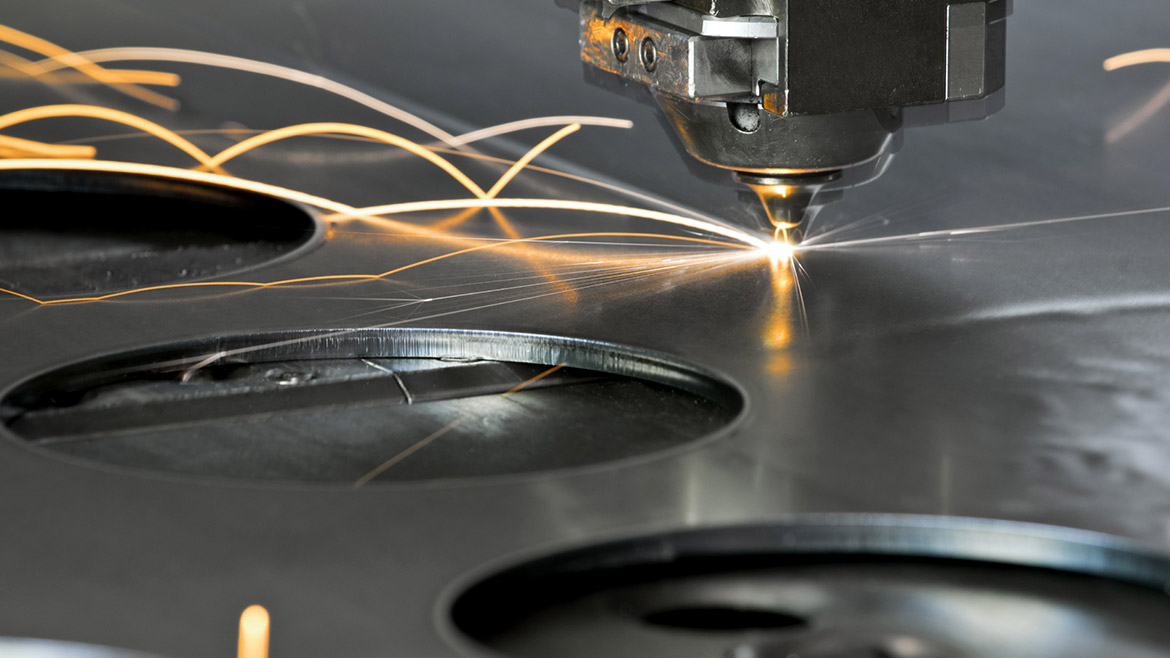
Galvanized laser cutting: The production of parts using laser cutting at DM Laser Industrial Group is widely accepted in the industry. Laser cutting offers various advantages, including high flexibility in process parameters and material types. It can be used for complex geometries with different dimensions. During metal sheet laser cutting, thermal stress spreads in the cutting section, and material properties and cutting conditions influence the thermal stress surface.
Galvanized iron is coated with zinc, which protects it from rust even if the coating is damaged. In galvanized iron, an electrochemical cell forms between the iron and zinc, where zinc acts as the anode and iron as the cathode. Zinc oxidizes at the anode because it is more reactive than iron, having lower reduction potential and higher oxidation potential.
Galvanized iron laser cutting is used to manufacture items such as stove pipes, cooler ducts, kitchen cabinets, house roofs, water pipes, and anywhere corrosion of iron might cause damage.
Advantages of Galvanized Laser Cutting
Galvanized laser cutting offers several benefits, such as creativity in design, flexibility
to create complex designs,
high precision, fast speed, low cost, consistent accuracy in repetitive cuts, high edge
quality, minimal waste,
no changes in metal structure, mass production capability, simultaneous manufacturing of
parts with the same thickness,
and eliminating multi-step processes. Overall, the advantages of galvanized laser cutting
can be summarized as follows:
- Due to its high quality and speed, laser cutting is a suitable alternative to waterjet and
plasma cutting.
- Material removal and kerf width in galvanized cutting are minimal, allowing for cutting
delicate and fine elements.
Key Considerations for Galvanized Laser Cutting
- Taper Angle: Refers to the change in hole diameter through the sheet thickness.
- Burr Formation: The fewer burrs produced after cutting, the better the final quality and
less need for secondary machining processes.
- Kerf: Kerf determines the smallest radius that can be cut, which depends on the sheet
thickness and should be considered in design.
For example, sharp corners should have a minimum radius equivalent to the kerf.
Additionally, the minimum hole size that can be created
in metal sheets depends on the sheet thickness. The smaller the kerf, the more capable the
machine is at cutting complex contours and fine thick teeth.
- Cutting Speed: Highly dependent on the machine's capabilities and laser beam power. Higher
power allows for increased cutting speed.
- Surface Finish: One of the most important parameters in cutting is surface smoothness and
lack of oxidation. This can be achieved
by combining different technologies and carefully adjusting control parameters such as gas
type, gas pressure, cutting speed,
and laser beam power.