Welding
Welding is one of the oldest methods used in industry to join two pieces together. This process offers various solutions depending on the type of materials used and the location where it is performed, providing different options for engineers and technicians involved in welding. Welding can be defined as a process in which two metallic or even non-metallic pieces are joined by heating the connection area or melting the joining material.
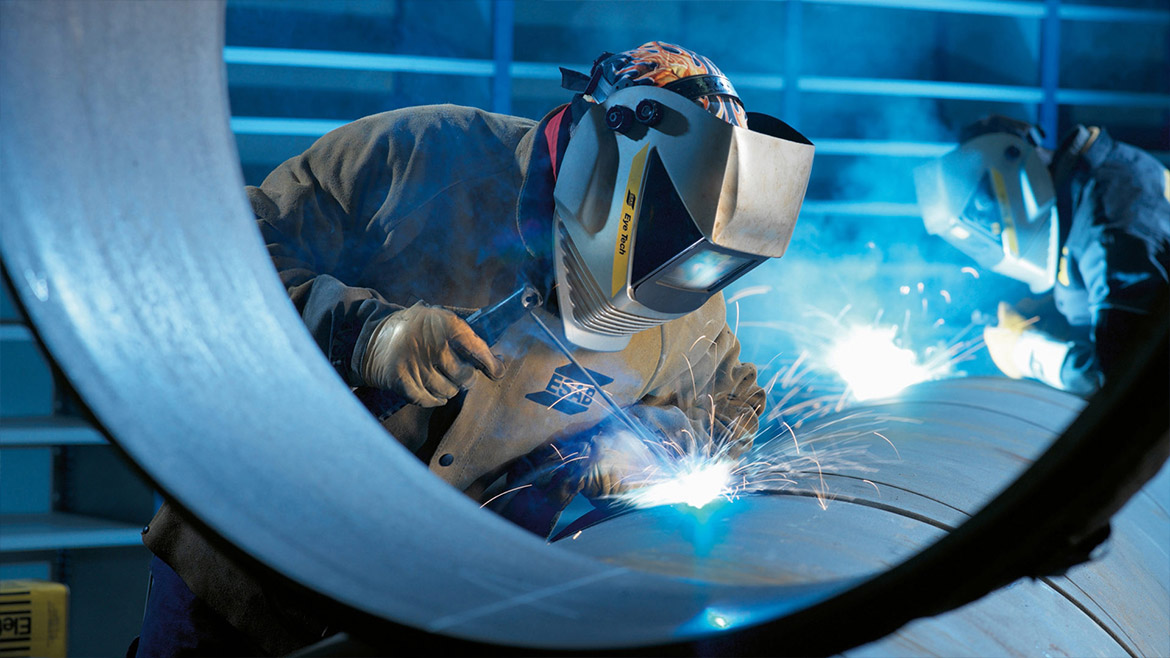
Welding at DM Laser Industrial Group
Welding is a method of permanently joining two pieces through an appropriate combination of pressure and high temperature. It may involve high temperature at the connection point without pressure, or high pressure without an increase in temperature. Due to the heat and pressure at the weld area, two materials mix and form a metallurgical bond. Therefore, to ensure good weld quality, sufficient heat and pressure should be applied, the surfaces of the pieces should be cleaned, and proper protection should be maintained during the welding process. Every machine consists of many parts, some of which are movable connections (like a link) such as the connection between the piston rod and the crankshaft, and many fixed connections. This allows for smaller subunits to be made, facilitating both manufacturing and transportation. These parts are then assembled in the assembly section. Therefore, welding is a crucial manufacturing method that plays an important role, as a large part of steel production today involves one or more welds.
DM Laser Industrial Group is equipped with advanced welding machines. If the customer requires welding operations, after the parts are produced by laser cutting machines and bending is applied when necessary, according to the blueprint and with the expertise of the specialists at DM Laser Industrial Group, this process can be executed.
Welding in the workflow occurs after laser cutting and bending on the material during the assembly stage. The production stages, including laser cutting, bending, and subsequent welding during assembly at DM Laser Industrial Group, optimize the coordination, precision, speed, and quality of the final product. With its experienced staff, DM Laser Industrial Group provides various services such as part design and modeling, laser cutting, bending, and welding of various materials. So, feel free to entrust all your industrial needs to DM Laser Industrial Group, ensuring your final product will be delivered with the best quality and scheduling.
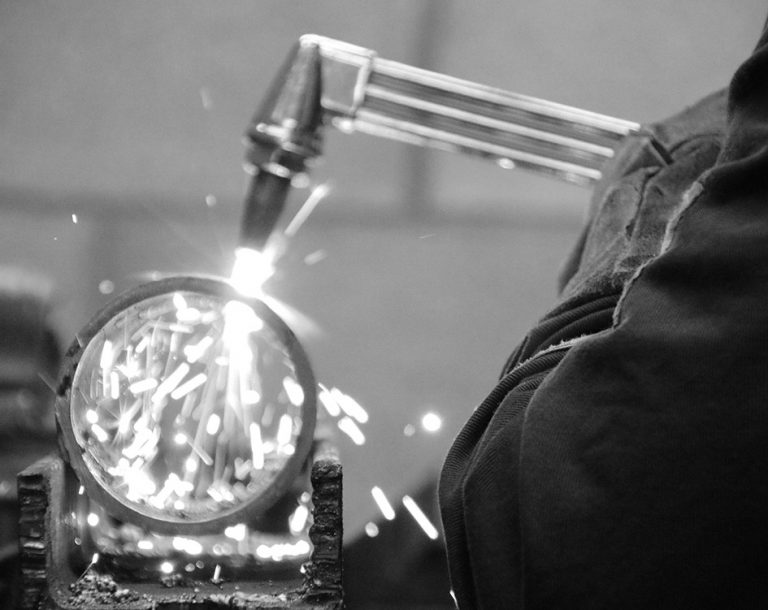
DM Laser Industrial Group began its operations with laser cutting and bending processes and gradually expanded its services to include welding and assembly based on customer needs. With the best welding machines, an assembly line, and experienced specialists, DM Laser Industrial Group has made significant progress in meeting the needs of related industries. In this center, various welding services are offered, including Argon welding, CO2 welding, spot welding, and more.
Welding Electrode
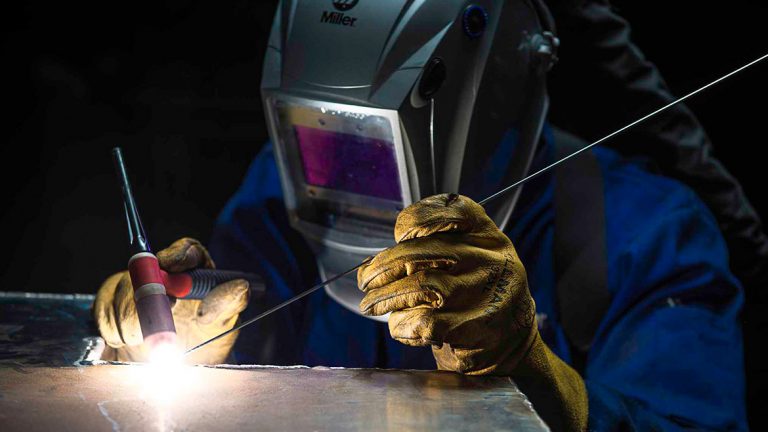
In a broader sense, a welding electrode can be defined as a coated wire, usually made of
metal, through which welding can be performed. The material of this electrode should be
compatible with the other equipment used in this profession.
By using the diameter of the core of this electrode, one can determine its size; but what is
the main function of this electrode? The welding electrode can connect two surfaces that are
apart and fill this gap. As mentioned earlier, this electrode must have a coating, which is
typically made of materials such as asbestos, sodium oxide, lime, and a few others.
Types of Welding Electrodes
Welding electrodes are produced in various types based on different characteristics and
factors, including electrodes based on coating flux, wire material, construction, and
coating thickness. Electrodes based on coating flux include types like cellulose electrodes,
rutile electrodes, and alkaline rutile electrodes with iron powder.
Electrodes based on coating thickness include thin, thick, very thick, and medium thickness
options. Regarding welding electrodes based on wire material, examples include electrodes
made of aluminum, stainless steel, nickel, and low-carbon wire. As for welding electrodes
based on construction, various types such as low-hydrogen, quick-stick, fast-freezing, and
filled-freezing electrodes are also available.
Types of Welding Methods
Welding and assembly is a manufacturing method aimed at permanently joining materials together, ensuring the welded joint’s properties are equal to the properties of the base material.
Electric Arc Welding
Electric arc welding is a method used to join parts by creating a continuous flow of electrons between two electrodes or an electrode and a piece, generating heat. Air or gas is necessary to create the electric arc, and welding cannot occur in a vacuum. Gas-shielded electric arc welding includes two methods: MAG and MIG, which differ in the type of gas used to protect the weld.
CO2 Gas Welding
MAG welding is essentially CO2 welding, which uses one of the least expensive gases for electric arc welding and provides excellent protective properties. However, it is sensitive to arc length, which must be kept constant during use. CO2 is the most commonly used gas for welding mild steel due to its cost-effectiveness. CO2 welding is a suitable method for welding both hard and non-hard metals, and thin metal sheets can also be welded. This method requires more equipment and tools, and to achieve high-quality welds, CO2 gas must be moisture-free and of high quality, along with proper welding wire and rust-free workpieces.
Argon Gas Welding
MIG welding is the same as argon welding, in which a non-consumable tungsten electrode is used to create an arc, and argon gas is used to protect the weld. The inert gas displaces air from the welding area and prevents the electrode from oxidizing. In this type of welding, the electrode is used only for creating the arc and is not consumed like in other welding processes. This method is used for welding various metals and alloys, including carbon steels, stainless steels, low-alloy steels, aluminum, copper, nickel, and thin sheets under 1mm. Due to the absence of smoke and sparks, the welding area is clearly visible, and by injecting filler metal from outside the arc, arc turbulence is minimized, leading to higher-quality welds.
Assembly
After the parts are produced, the component manufacturing unit at DM Laser Industrial Group, with coordination from the planning unit, notifies the production unit about the assembly items that are ready for production. In this stage, production is carried out according to priority and on a scheduled basis, and finally, the product is completed by adding complementary parts during the assembly process.
Welding Work Stages
In this section, we will explain the welding process in simple terms. It is important to note that no matter how many different and comprehensive welding articles you read, it is not enough to fully learn this craft. These writings are solely for informational purposes about the work process. Therefore, for any welding operations, it is essential to rely on professional and skilled welders.
First Step: Preparing the Welding Machine or Inverter
The inverter has two sockets, one for the positive pole and one for the negative pole. To begin welding, you need two cables and a welding machine. The first cable should have a clamp, and the second cable, used as the connection cable, should have a clip. The cable with the clamp connects to the positive pole, and the connection cable connects to the negative pole. At this stage, the machine is ready to work, and by pressing the power button, it can be used.
Second Step: Preparing the Welding Area
In the second step, you should connect the clip cable to the steel. Check the clamp to ensure it is properly attached to the steel to establish a good connection with the machine. Then, ensure the clamp's tip on the steel piece does not vibrate, as this can cause the cable to heat up too quickly.
Third Step: Safety Before Work
In the third step, you must use a welding mask. Also, wearing specialized gloves to protect your hands from burns is essential. Failure to use the mask can cause severe eye damage or, in some cases, temporary blindness.
Fourth Step: Preparing the Electrode
Once the machine is on and the clip is connected to the steel, it is time to prepare the electrode or welding wire. For small welding tasks like spot welding, a 3mm diameter electrode is typically used. Now, place the appropriate electrode in the clamp cable and adjust the machine’s amperage between 50 to 70 using the control switch.
Fifth Step: Performing the Welding Operation
The most sensitive and important part of welding is the final stage. If not done according to the proper welding principles, it can cause damage, loss, and ruin the work. Position the clamp near the welding area, but remember, it shouldn't be too close as it may cause the electrode to stick to the workpiece, potentially burning the device. On the other hand, it shouldn't be too far either, as the molten electrode might splatter onto the iron surface, possibly creating holes. In general, according to welding principles, the distance between the electrode and the welding spot should be about two to three millimeters. Now, holding the clamp attached to the electrode in your hand, bring it near the welding site and simultaneously move it towards yourself. This will cause the electric arc to form, which will weld the two iron pieces together.
It is better to initially use a few tack welds to connect two iron pieces, and as soon as the tack welds form the electric arc, move the electrode away from the welding spot. After the tack welds are formed, you can remove the weld spatter, also known as slag, from the weld using a small hammer. If this is not done, the slag will be trapped in the molten pool during subsequent welding, leading to porosity and failure of the weld.