Laser Cutting Services
Laser cutting services, with their high precision and speed, are an ideal choice for industrial and artistic projects. This technology uses powerful laser beams to create high-quality cuts with smooth and flawless edges. If you are looking for a reliable way to cut metals, wood, plexiglass, or other materials, our laser cutting services guarantee that you will receive accurate and high-quality results. With our specialized team and advanced equipment, we are ready to execute your complex and custom designs with utmost precision and detail, optimizing your time and costs, and providing a distinctive product. Laser cutting is a technology that cuts various materials with high speed, precision, and power using a laser. Due to the small diameter of the laser, the cuts are very precise and free of any errors.
What is Laser Cutting?
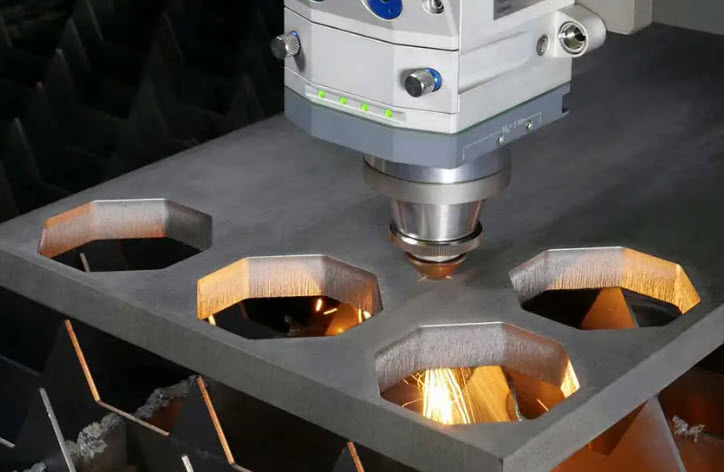
Laser cutting is one of the advanced technologies in the metal industry that is widely used in the production and manufacturing of metal parts. This technology enables precise, fast, and efficient cutting of metals and separates it from traditional methods such as mechanical cutting with various tools. Laser cutting uses laser light energy, which is applied precisely and controllably to the surface of the metal, to cut metal parts into desired shapes with high accuracy. This technology is used for cutting various metals, including steel, aluminum, copper, and stainless steel, and is employed in various industries such as automotive, aerospace, marine, and construction.
Laser cutting services for metals are provided by companies and industrial units equipped with professional laser cutting machines. These companies, using advanced technologies and specialized skilled teams, cut metal parts with excellent quality and precise dimensions, professionally addressing the needs of various industries. In addition to high accuracy and cutting speed, laser cutting also offers other capabilities. This technology can cut various shapes, preserve the mechanical properties of metals, reduce damage around the cut area, and enable computer-controlled cutting. Also, since the laser energy is applied briefly and precisely, there is no need to change cutting tools, which extends the lifespan of the equipment.
Advantages of Laser Cutting
The main advantage of laser cutting over other methods is its concentrated energy, which has a small focal diameter and high speed, making this cutting process very precise and delicate. Another advantage of laser cutting compared to mechanical methods is its ease of use; after cutting, the edges do not get damaged, and in addition to straight cuts, curves can also be cut. Moreover, this cutting method is highly accurate and does not damage the overall workpiece. You can visit the laser cutting advantages page to see other features of it.

Professional DM Laser Services
DM Laser, with a complete range of laser cutting services, is recognized as one of the industry leaders in the country. Our services play a key role in many industries, including healthcare, automotive, and other industrial sectors. Considering the need for advanced equipment, maintenance costs, and workforce expertise, outsourcing this process to specialized companies like DM Laser is an economical and smart solution for businesses. In addition to laser cutting of metal sheets, we provide a variety of other services including metal bending, waterjet cutting, plasma cutting, punching, electrostatic painting, plating, and welding with the highest quality and precision to best meet the diverse needs of our clients.
Brief Introduction to Laser Cutting Machines
In recent years, metal cutting was done using specialized saws and traditional methods, which were very time-consuming and exhausting. Today, with technological advancements, laser cutting machines are used, making the work much easier. Working with these machines has increased work speed, minimized errors, and allowed for more complex designs. With the advent of laser cutting machines, the quality of work has greatly improved, and the cleanliness of the cuts has also increased, eliminating sharp edges and extra cut sections.
Types of Laser Cutting Machines
There are various types of laser cutting machines, but the most common ones are:
CO2 Lasers: This type of laser uses carbon dioxide gas to generate the laser beam. CO2
lasers are suitable for cutting a wide range of materials, including acrylic, wood, fabric,
and plastic.
Fiber Lasers: This type of laser uses an optical fiber core to generate the laser beam.
Fiber lasers are highly efficient for cutting metals and can cut thicker materials than CO2
lasers.
Nd:YAG Lasers: This type of laser uses a yttrium aluminum garnet crystal doped with
neodymium to generate the laser beam. Nd:YAG lasers are suitable for cutting a wide range of
materials, including metals, plastics, ceramics, and organic materials.
Ruby Lasers: This type of laser uses a synthetic ruby crystal to generate the laser beam.
Ruby lasers are suitable for cutting metals and other hard materials.
Here are some additional tips for choosing a laser cutting machine:
Laser Power: Laser power is measured in watts. Higher laser power allows you to cut thicker
materials or cut materials faster.
Cutting Area: The size of the laser cutting area is measured in inches or millimeters. The
cutting size determines how large the materials you can cut in one go.
Table Type: There are various types of laser cutting tables. The table type you choose
depends on the type of materials you want to cut and the size of the materials.
Additional Features: Laser cutting machines can come with a range of additional features
such as fume extraction systems, autofocus systems, and automatic loading and unloading
systems.
When choosing a laser cutting machine, it is important to consider your needs and budget.
Laser services in metals are used in industries for designing and engraving on metals such
as gold, silver, brass laser cutting, aluminum, platinum, copper, and others.
| Laser Cutting Type | Cuttable Materials | Applications | Advantages |
|---|---|---|---|
| Metal Laser Cutting | Steel, Aluminum, Copper, Brass | Industrial parts, Decorative parts, Construction | High precision, Clean edges |
| Non-Metal Laser Cutting | Wood, Plastic, Glass, Fabric | Advertising, Decoration, Model making | Precise cutting, High speed |
| CNC Laser Cutting | Steel, Aluminum, Wood | Machined parts, Molding | Extremely high precision, Repeatability |
| Fiber Laser Cutting | Steel, Copper, Brass | Automotive industry, Aerospace, Electronics | Thin cuts, High speed |
What are the Advantages of Laser Cutting Machines?
These machines, like other devices, have advantages that have made them popular for use,
which are as follows:
Fast project delivery
Accurate and orderly metal cutting
Delivering work with no defects
Increased work speed
Hassle-free cutting of various iron, aluminum, copper, and steel sheets
Very little burr production during cutting
Less waste produced
Can perform complex cuts on various metals in the shortest time.
Applications of Laser Cutting Services in Industry
| Industry | Applications |
|---|---|
| Transportation Industry | Cutting automotive parts and accessories, manufacturing and producing vehicle bodies and various parts |
| Construction Industry | Cutting various construction materials such as metal sheets, stone, ceramics, and wood, creating beautiful and unique designs on walls and interior surfaces |
| Engraving | High-precision engraving on various materials and objects, creating advertising signs, logos, jewelry, and more |
| Aerospace Industry | Precise cutting of aircraft parts with high accuracy, manufacturing complex and sensitive engine components |
| Model Making | Precise and delicate cutting of various materials such as wood, plexiglass, and cardboard, creating industrial, architectural models, and more |
How Laser Cutting Works
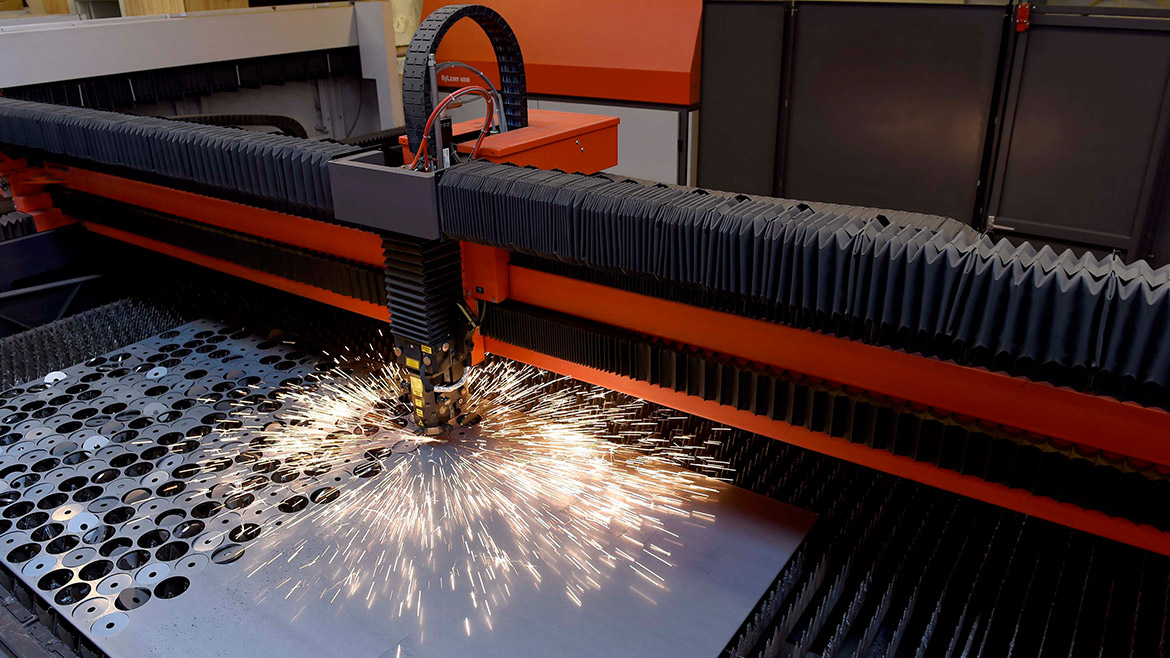
To perform metal laser cutting, the laser beam is first prepared. Initially, the raw materials used for laser generation are placed in the machine's laser generator, and then they are stimulated using electrical current or other methods. The laser-generating materials are stimulated through electrical current or a lamp's radiation, and the generated beam is reflected using mirrors in the machine to acquire the necessary energy for cutting. The beam is then focused on the target point through a lens located at the device’s head, which can shrink the beam to a size as small as 0.23 mm.
This cutting process allows you to achieve smooth, flawless cuts without any burrs. To cut metals using laser, materials such as CO2, ND, and ND-YAG are used, and the appropriate material should be chosen based on the type of work you intend to do. CO2 is used for cutting metals, while YAG is used for both cutting and engraving. To prevent the heat generated from damaging the machine, a cooling system is used, transferring the heat outside the machine and reducing the internal temperature through water cooling.
History of Laser Cutting
Laser cutting was first introduced in 1965 by creating holes in diamond molds for use by
artisans. The first laser machine was developed by the Western Electric Engineering Research
Institute. This early machine was a CO2 type, which had limitations in its structure,
preventing it from cutting metal sheets, metallic objects, or steel.
The initial design of this machine was intended for industries working with leather,
textiles, decoration, wood, and plastic. In CO2 laser cutting, the thermal conduction
process was not powerful enough for cutting metals, so it could only be used for objects
where thermal conduction did not occur when the laser beam was applied. These limitations do
not mean that CO2 lasers were completely impractical, as they are still widely used in
industries such as wood, MDF, plastic, plexiglass, leather, and fabric.
Evolution of Laser Cutting Machines
In 1967, the United Kingdom took measures to overcome these limitations and designed and
produced the first machine using oxygen jet technology. This machine was capable of cutting
metals. This invention led to a revolution in industries working with metals and helped
increase the speed and quality of metal part production.
Laser cutting technology made significant progress in manufacturing parts for various
industries, such as aerospace, automotive, electronics, pharmaceuticals, production
engineering, and the military. In the early 1970s, oxygen jet cutting technology was used to
cut titanium metal in the aerospace industry. This allowed for rapid adoption in various
industries, and it became a standard practice. What was once limited by technological
constraints is now available with the highest quality and speed, allowing producers to
significantly increase their output.
Today, no car can be found that hasn’t used this technology in its manufacturing and
assembly, as at least one metal part has been cut using laser cutting. With the development
of laser cutting machines, other technologies have been introduced to the market, and
industries now select the laser type that best suits their needs and working methods.
Currently, the most commonly used methods for cutting metal sheets and iron laser cutting
worldwide and in Iran are oxygen jet, fiber, and water jet technologies.
Laser Cutting Prices
Pricing for laser cutting services has always been a major concern for customers in this field. Below, we will discuss the different pricing methods for laser cutting and help you choose the best option for your project.
Pricing Methods
Per Meter Cutting: In this method, the price is calculated based on the length of the cut
(meter). This method is suitable for simple and straight cuts.
Per Minute Cutting and Engraving: In this method, the price is based on the time spent
cutting and engraving (minutes). This method is ideal for intricate cuts and detailed
designs.
Minimum Price: In this method, a fixed price is set for the project, regardless of the
amount of cutting. This is suitable for small and low-cost projects.
Average Cutting and Engraving: In this method, the price is based on the average time spent
on cutting and engraving, as well as the cut area.
Manufacturing and Assembly: In this method, the cost of cutting is added to the cost of
manufacturing and assembling the parts, which is included in the final price.
Factors Affecting the Price
Type of Sheet: The type of sheet (metal, plexiglass, wood, etc.) and its thickness affect
the cutting price.
Design Complexity: Complex and intricate designs require more time for cutting and
engraving, which increases the price.
Number of Cuts: The number of cuts on each sheet influences the final price.
Additional Services: Services like engraving, bending, and welding are also added to the
final price.
Calculating Per Meter Cutting Price
iCut Software: This software automatically calculates the cutting length.
CorelDRAW: Using CorelDRAW's measurement tools, the cutting length can be determined.
Laser Cutting Machine Software: Some laser cutting machines have built-in software to
calculate the cutting length.
Choosing the appropriate pricing method for laser cutting depends on various factors such as
sheet type, design complexity, number of cuts, and additional services. By considering these
factors and using methods to calculate cutting length, you can estimate the final price for
your project.